
Accommodative monetary policy has driven a bull market in stocks in recent years, but the Bank of England is expected to raise interest rates early next year and the U.S. Federal Reserve not long after, tempering future gains.

There has been a stellar rise for the Indian markets this far in calendar year 2021 (CY21) with the S&P BSE Sensex surging over 19 per cent. The gain in mid-and small-cap indices on the BSE has been sharper with both these indexes surging around 38 per cent and 54 per cent, respectively during this period. Rampant spread of Covid pandemic's Delta variant and the ensuing lockdown and mobility curbs across India, rising prices key commodities, including crude oil and its impact on inflation, possibility of tightening of policy stance by major global central banks, especially the US Federal Reserve (US Fed) have been some of the key headwinds that the markets successfully negotiated during this period.

Asserting that foreign funds are very bullish on investment opportunities in India, a senior government official said on Friday the country was a profitable place to do business and would soon become an easier place for business.

Index heavyweight RIL surged 3% to end above Rs 1,000 mark while IT majors were also the top gainers.

Tuesday's was the S&P's worst drop since August 24.

Global rating agency Standard & Poor's today said 2014 will continue to be a challenging year for the asset quality and profitability of the country's banks as the economy is expected to make a tepid recovery.
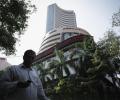
Financials and auto stocks were the top losers while energy and IT shares recovered

The S&P and Dow dipped the most in a day since September 28.

The S&P BSE Midcap and the S&P BSE Smallcap indices added 0.5% and 0.7%, respectively

Market breadth continued to remain strong, with 1899 gainers and 674 losers on the BSEs.

Many years during which monsoons were poor saw high returns, while normal or excess rainfall has also coincided with poor calendar year gains.

'Earning expectations remain strong.'

Reliance Industries was the top gainer in the Sensex pack, rising over 1 per cent, followed by M&M, HCL Tech, Axis Bank, ICICI Bank and HUL. On the other hand, Bharti Airtel, Maruti, SBI, PowerGrid, NTPC and Tata Steel were among the laggards.
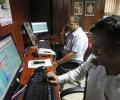
S&P BSE Midcap and the S&P BSE Smallcap indices gained 2% and 1.6% respectively

However, investors have turned cautious over the likelihood of Britain leaving the European Union.

The S&P BSE Midcap and the S&P BSE Smallcap indices slipped in red to shed over 1% each

RBI Deputy Governor K C Chakrabarty said the central bank will come out in June with its next financial stability report, which showcases the country's financial strength, and
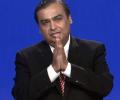
However, in the last few sessions, the stock of Mukesh Ambani-controlled Reliance Industries Limited (RIL), hit its 52-week low level of Rs 2269.75, and has been one of the worst performers among the Sensex pack thus far in calendar year 2023 (CY23). Thus far in CY23, RIL has tanked nearly 11 per cent as compared to a fall of around 5 per cent in the S&P BSE Sensex. The fall in the stock, according to Gaurang Shah, senior vice-president at Geojit Financial Services is mostly due to the overall dip in the market sentiment, which in turn has impacted large-caps, including RIL.

The rating outlook change is relevant now, as the US Federal Reserve is set to end its monthly bond-buying programme in October.

Capital goods shares continued to trade firm in late noon despite weak market trend on the back of encouraging core sector growth in February.
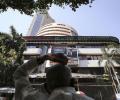
BSE IT index was the biggest sectoral loser, down 1.5% dragged by TCS
Metals, auto and banking shares were in the limelight in this session; the FMCG pack, however, ended lower.

The Karnataka election is being seen as the semi-final to the 2019 general elections and appears to be heading towards a close fight

Technical rallies and short covering may arise only if the markets break this 500 point band

Govt unlikely to cut excise duties to compensate for higher global prices, say analysts.
Rating agency Standard & Poor's is using the experience of working with the Indian rating agency, Crisil, a subsidiary of S&P, to its advantage. Deven Sharma, president, Standard & Poor's, spoke to Rajesh Bhayani

Equity markets halted their two-day rally on Friday, with the Sensex tumbling 714.53 points amid weak global equities and selling in index majors Infosys, ICICI Bank, HDFC Bank and Reliance Industries. Continuous foreign fund outflows also dented sentiments. The BSE benchmark Sensex tanked 714.53 points or 1.23 per cent to settle at 57,197.15. During the day, it plummeted 776.96 points or 1.34 per cent to 57,134.72. The NSE Nifty also declined 220.65 points or 1.27 per cent to 17,171.95.

Stocks of companies having operations and exports to Europe were the top losers.

OIL, IOC, HPCL, BPCL slipped between 0.1-1.5% each while the oil producing companies such as ONGC (0.1%), RIL (1.5%), GAIL(2.6%) also edged lower.

A statement issued by the Interior Ministry also said the crackdown on Jaish 'has been taken in line with the decision of the NSC meeting'.

Experts say the BSE Sensex could rise to around 32,000 in a year.

"High inflation could derail India's stable macroeconomic and interest rate environment", Standard & Poor's said in a statement.

Usually, a fall in oil prices is followed with a cut in retail prices of auto fuels and the government passes on the benefit to consumers. However, Morgan Stanley believes gains this time around will remain capped.

The S&P BSE Midcap and the S&P Smallcap indices rallied over 1% each

Shares of IT companies were in focus with the Nifty IT and S&P BSE IT index gaining more than 2% in an otherwise lower market

The immediate revenue loss could worsen the Centre's fiscal deficit, from the budgeted 3.3 per cent of gross domestic product (GDP) to 3.7 per cent of GDP -- a massive 40-basis-point increase. It was stabilised at 3.4 per cent since 2016-17, report Abhishek Waghmare and Dilasha Seth.

Microsoft saw its shares fall 2.6% on Monday.

Markets ended weak tracking the expiry of April derivative contracts.
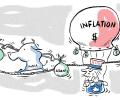
'The biggest risk to the Indian markets from a 12-18-month view is that the current government does not get re-elected, or loses in a way that is not represented at all in the next central government.'

Shares of telecom services providers - Reliance Industries (parent of Reliance Jio), Bharti Airtel, and Vodafone Idea - have shed up to 23 per cent so far in the current calendar year as growth in the wireless subscriber segment begins to plateau amid higher tariffs and rising costs of smartphones. By comparison, the benchmark S&P BSE Sensex, and sectoral index BSE Telecom have dipped 1.8 per cent, and 12.6 per cent, respectively, ACE Equity data shows. However, analysts expect the trend to reverse soon as telecom services providers focus on the next leg of growth -- fixed broadband (FBB) segment.
